 Howard Hubler
 The digital age dictates new rules for marketing. Virtual reality (VR) and augmented reality (AR) technologies turn advertising into more than just ads: they create entire worlds where brands interact with audiences on a deep level. The meta-universe – a virtual space that connects users – is becoming an arena for promoting products and services. Companies are building digital realities in it to sell, engage customers, and build loyalty. How exactly are businesses utilizing these innovations and what does this mean for the future of advertising?
The meta-universe: the new frontier of marketing
The meta-universe is not just a buzzword, but a full-fledged ecosystem where people communicate, work and have fun through avatars. Platforms like Decentraland, Roblox or Horizon Worlds already gather millions of users every day. For brands, this opens up unique opportunities: instead of standard advertising formats, they create virtual spaces where customers become participants in the process.
Imagine a digital store where a customer walks between the windows, studies the products and even communicates with an avatar consultant. Or a concert where the brand acts as a sponsor and the audience receives virtual souvenirs. Such scenarios are no longer fantasy – companies are actively exploring these territories, turning them into points of sale and platforms for interaction.
Virtual reality: depth of experience
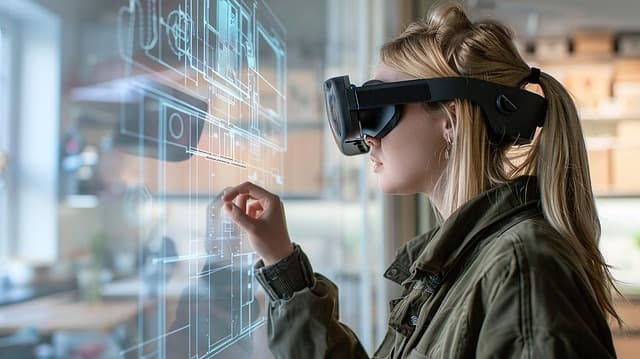
VR takes the user into a fully artificial environment where they feel like they are part of the experience. Brands are using this technology to offer customers a unique experience. For example, car manufacturers launch virtual test drives: the buyer gets behind the wheel without leaving his room and evaluates the car in action. Fashion houses organize shows where every viewer sits in the front row and tries on outfits on their avatar.
The effect of such campaigns is impressive: people don’t just see the product, they live it. This strengthens the emotional connection and increases the likelihood of purchase. In addition, VR helps brands stand out from the competition, because traditional videos and banners no longer surprise the audience. Creating virtual spaces requires investment, but the result justifies the cost: customers come back for new impressions.
Augmented reality: a bridge between worlds
AR works differently: it adds digital elements to the real world, accessible through smartphones, tablets or special glasses. This technology is ideal for interactive solutions. Cosmetic brands offer to try on lipstick or shadows through your phone’s camera. Furniture companies allow you to “stage” a cabinet in your living room to assess how it will fit in.
Such tools shorten the distance between online shopping and the physical experience. The user sees the product in the context of his or her life, which simplifies the choice and reduces the risk of returns. AR is also actively used in social networks: brands create filters that turn selfies into advertisements. For example, after wearing virtual glasses from a famous designer, the user shares the photo with friends, unwittingly promoting the product.
Cases that inspire
Global companies are already demonstrating how VR and AR are changing marketing. Nike opened a virtual store in the meta-universe: visitors buy digital shoes for avatars and get bonuses on real sneakers. Coca-Cola launched an AR campaign where players search for virtual cans in their city, earning prizes. Adidas created a VR game where participants compete in a running race while learning about the new collection.
Why it works
VR and AR solve several problems at once. Firstly, they attract attention: an unusual format arouses interest and the desire to try. Secondly, they increase engagement: the user does not passively watch advertising, but actively participates in it. Third, they collect data: companies analyze how people interact with the product in the digital environment and use it to improve their strategies.
The emotional component also plays a role. A virtual experience is remembered better than a static picture. If a person has “visited” the digital world of a brand, they are more likely to choose it in real life. This is especially important for young people who appreciate technology and are looking for non-standard solutions.
Challenges and solutions
Despite the prospects, VR and AR adoption is fraught with challenges. Developing virtual spaces is expensive: you need specialists, equipment and time. The audience of meta-universes is still limited – not everyone has VR helmets or powerful AR devices. In addition, users may be skeptical of innovations, preferring familiar channels.
Businesses are addressing these issues in stages. Many are starting with simple AR filters that are low-cost and work on smartphones. Others test small VR projects to understand customer reactions. Gradually, technology becomes more accessible and audiences become more open to experimentation.
What’s next?
For brands that decide to step into the meta-universe, it’s important to act strategically. The first step is to study the audience: who they are, what platforms they use, whether they are ready for technology. Then, choose a format: VR for deep immersion or AR for quick interaction. Finally, test the idea on a small group to adjust the approach.
Advertising in the meta-universe is already changing the market. Companies that use VR and AR don’t just sell products – they create communities where customers become co-creators of the brand. It’s a chance to rethink marketing and build a future where technology works on emotion and trust. Who will be the first to take the risk?